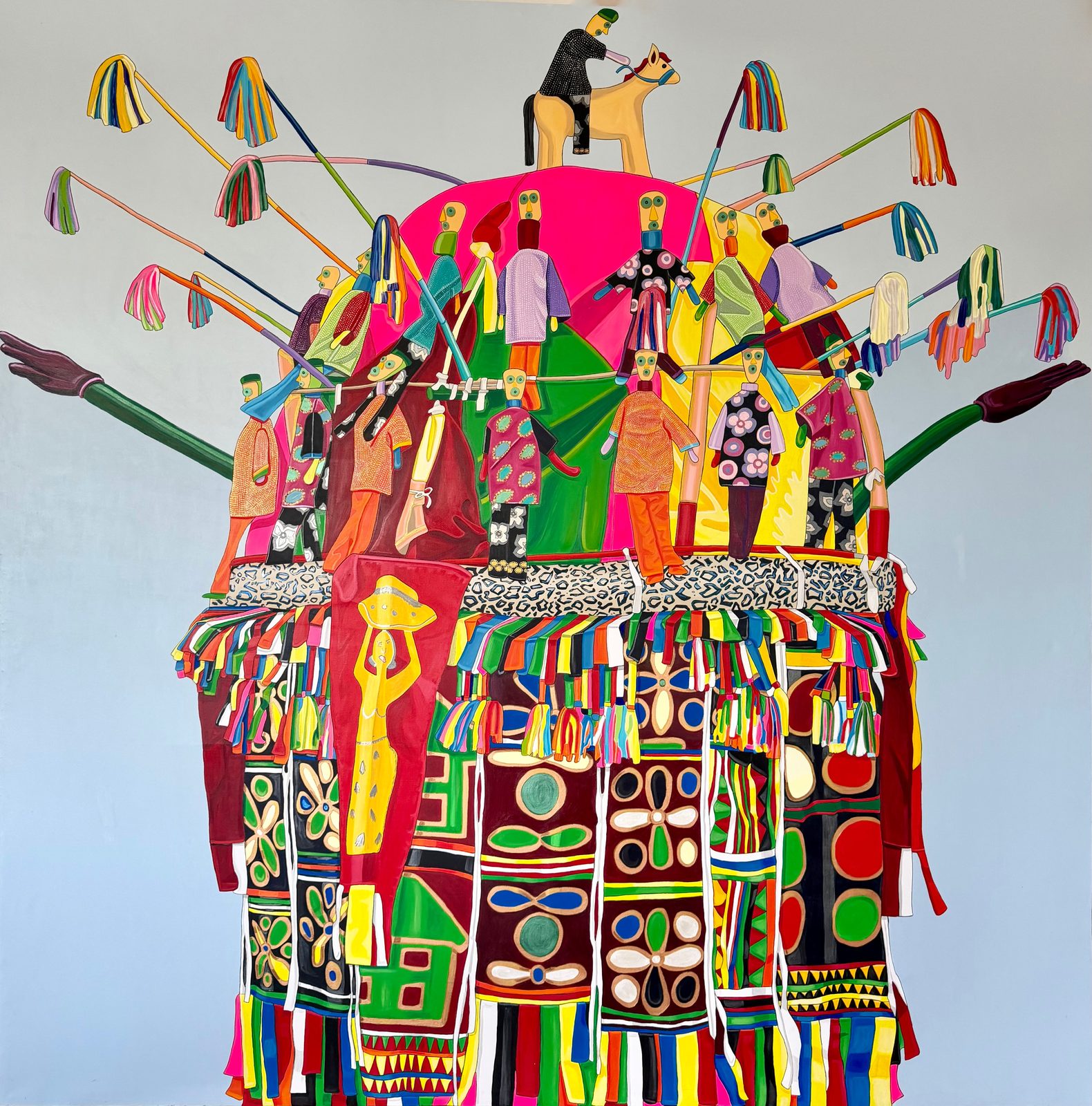
The Masquerades
Eze Mmuo, the King of Masquerades
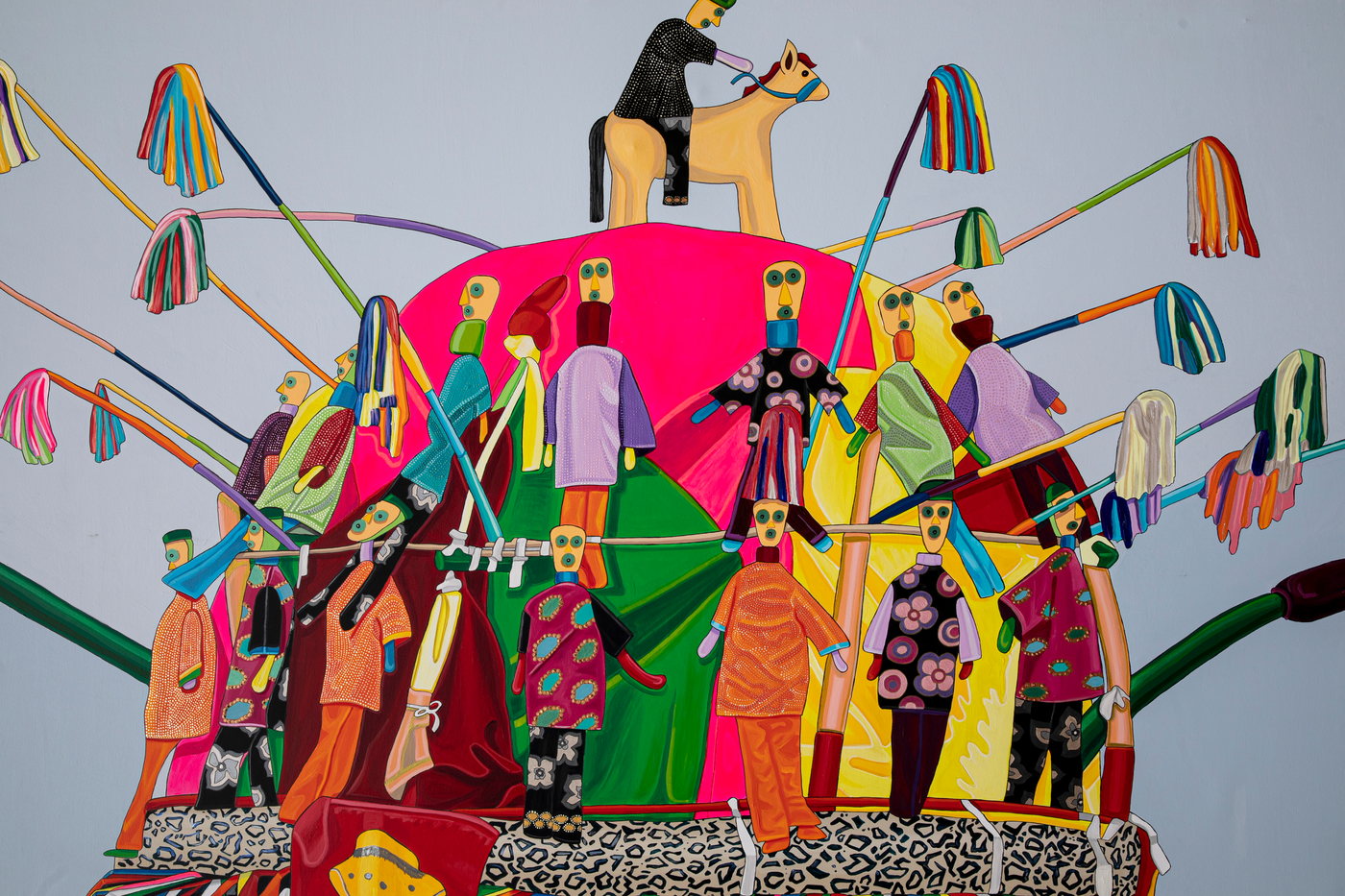
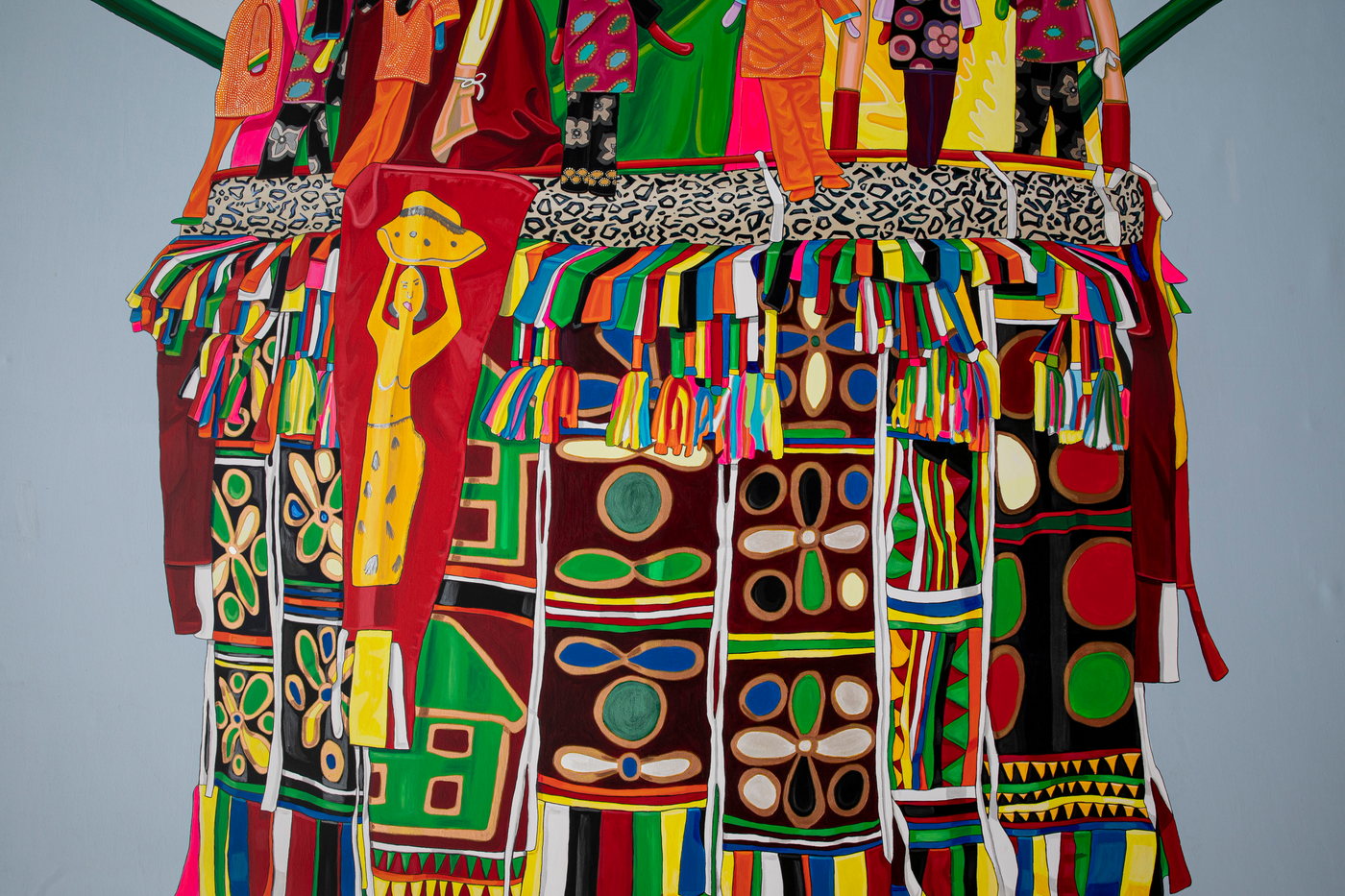
2026 · Acrylic and ink on canvas · 9 × 9 ft
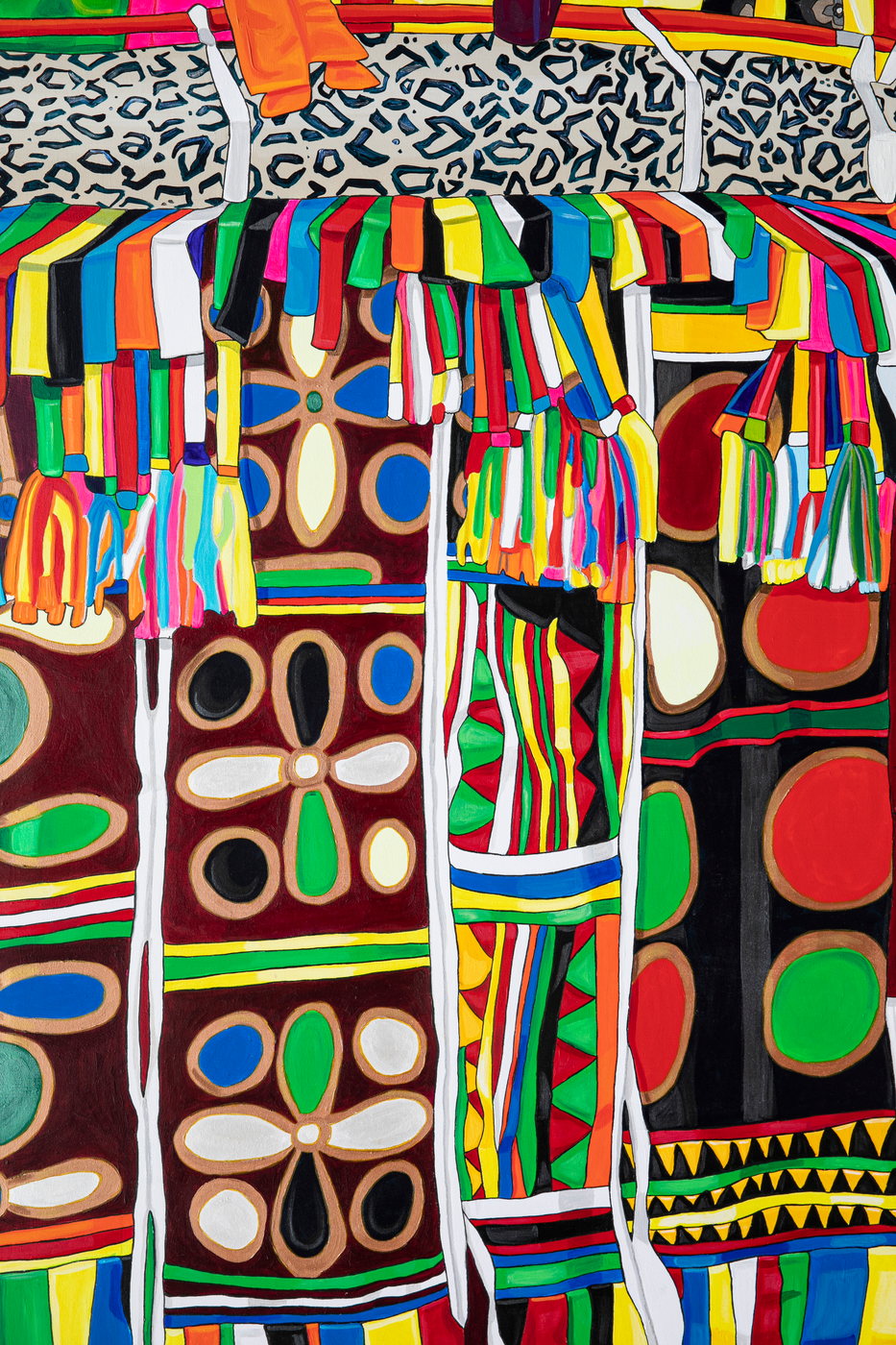
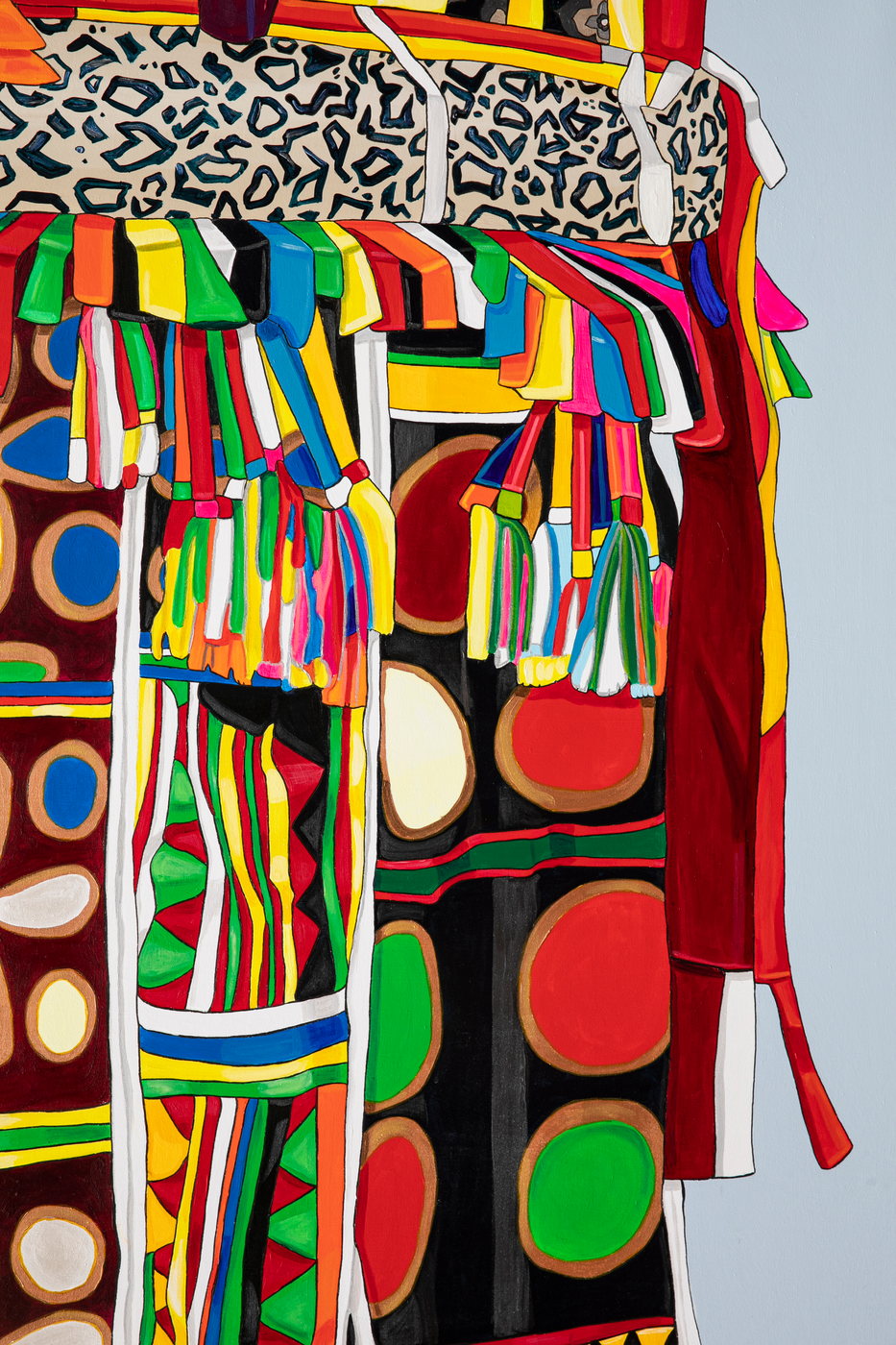
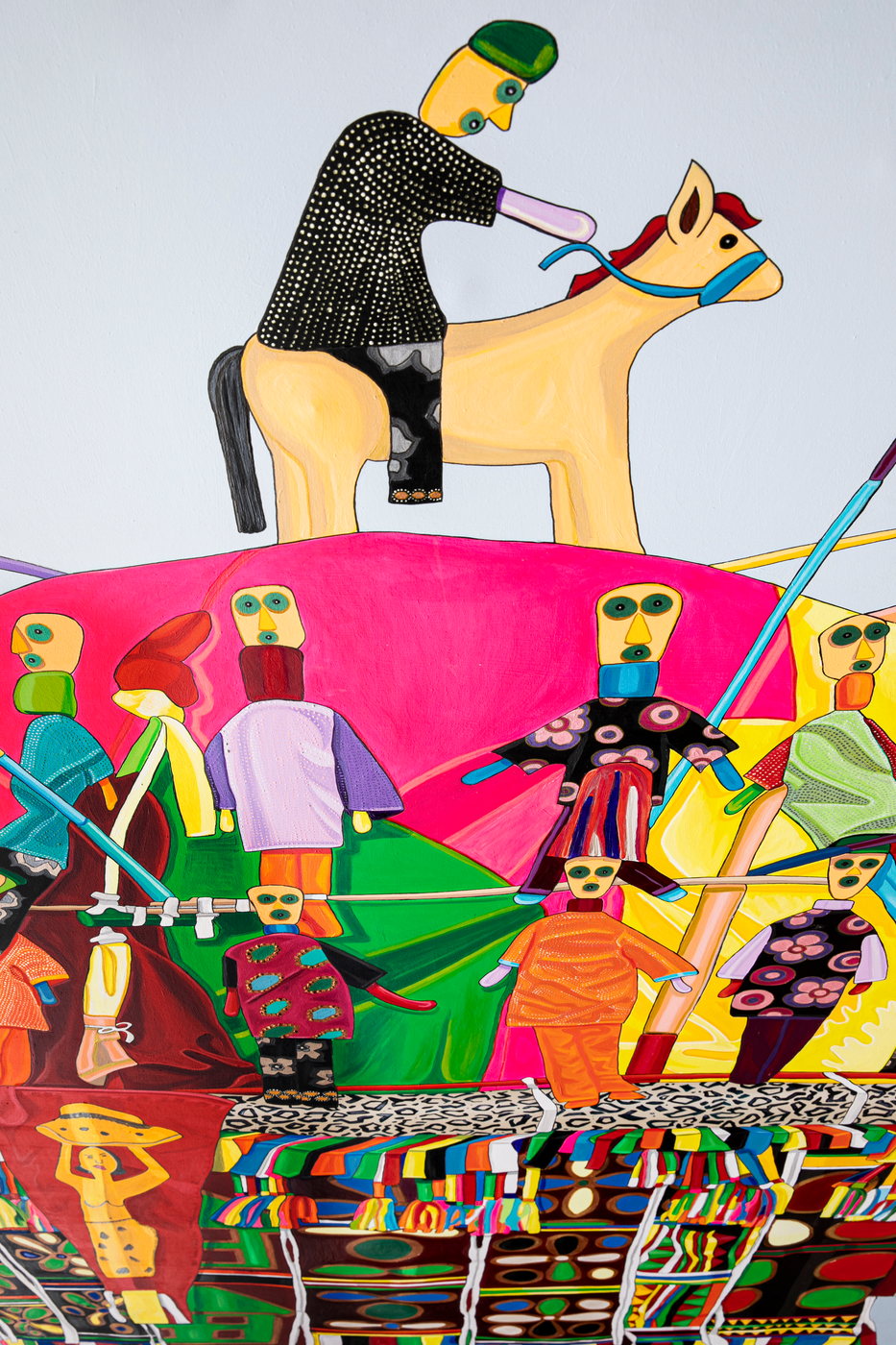
The name Ijele carries the sense of the majestic, the great. When it enters the square in Onitsha, every other masquerade falls silent. Standing roughly four metres tall, it is built on a vast circular frame of bamboo and cane, enriched with wood, raffia, foam, cloth and layered textiles. A python, eke, coils across its middle in the central division known as eke-ogba, separating the upper tier, mkpu Ijele, from the lower, akpakwulu Ijele. The structure becomes a moving sculpture of the Igbo world: warriors, elders, animals, spirits, rulers and episodes of communal life gathered into one body.
The upper tier was historically associated with subordinate masquerades that performed upon the structure; today their presence is recalled through sculpted and modelled figures. Across the body, each motif carries weight. Enyi, the elephant, speaks of resilience and unopposed leadership; eke, the python, conveys royalty, continuity and cosmic authority. A mirror fixed into the body turns away malevolent gazes and is believed to expose wrongdoers in the crowd. Notably, Ijele avoids fixed masculine or feminine markers: it represents the community as a whole rather than any single person.
Ijele traces its origins to the Omambala River basin and to communities including Anam, Aguleri, Umueri and Anaku, its lineage associated particularly with Umudiana in Umueri, from where it travelled to neighbouring towns. It appears in the dry season to call for fertility and a good harvest, and at the great communal moments: New Yam festivals, coronations, the funerals of important titled people. Its arrival is not solitary but processional, accompanied by attendants, supporting masquerades, musicians and singers. The rhythms of igba ino, the four drums, together with other instruments, chants and songs, carry prayers, histories and messages between the visible and spiritual worlds.
In the work
REWA paints Ijele at full, towering scale. Its architecture, motifs, colour and accumulated labour are rendered as a living economy rather than a relic: a monument that survives not by remaining fixed, but by being continually remade.
Its movement is stately and deliberate. As the King of Masquerades, Ijele embodies authority, wisdom, justice and ancestral force. It may reinforce moral values, address communal concerns and restore social cohesion, while its commanding presence can halt every other performance in the arena. It is spectacle, but never spectacle alone: its beauty is inseparable from ritual, memory and collective identity.
UNESCO inscribed Ijele on the Representative List of the Intangible Cultural Heritage of Humanity in 2009, naming the real risk plainly: not simply the loss of an object, but the loss of the people who carry the knowledge. An Ijele requires a large community of specialist makers: framework builders, carvers, textile artists, tailors, embroiderers, beadworkers, metalworkers, musicians, dancers and cultural custodians. Months of labour culminate in an appearance that may last only a single afternoon before the structure is dismantled.
That apparent impermanence is the source of its endurance. Ijele lives in skill rather than in stone. Its preparation mobilises patronage, distributes resources across a specialised creative economy and creates opportunities for performance, tourism, documentation and cultural exchange. As Ijele enters festivals, museums and international exhibitions, that visibility brings both opportunity and responsibility: adaptation must not strip the masquerade of the spiritual and communal integrity that gives it meaning.
Listen
Played live beside the masquerade. Igba ino, the four drums, with ichaka, okpokolo and ogene.
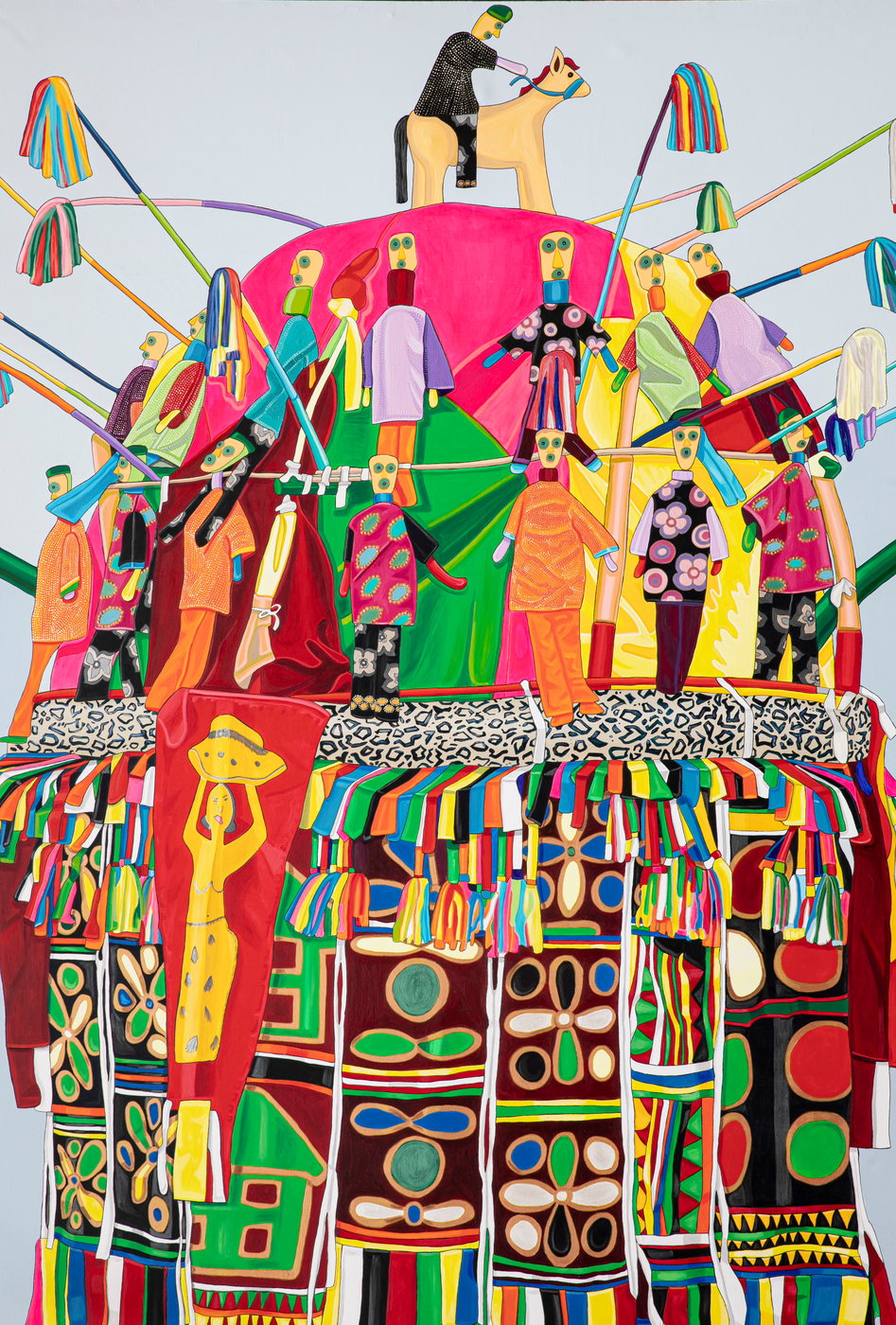
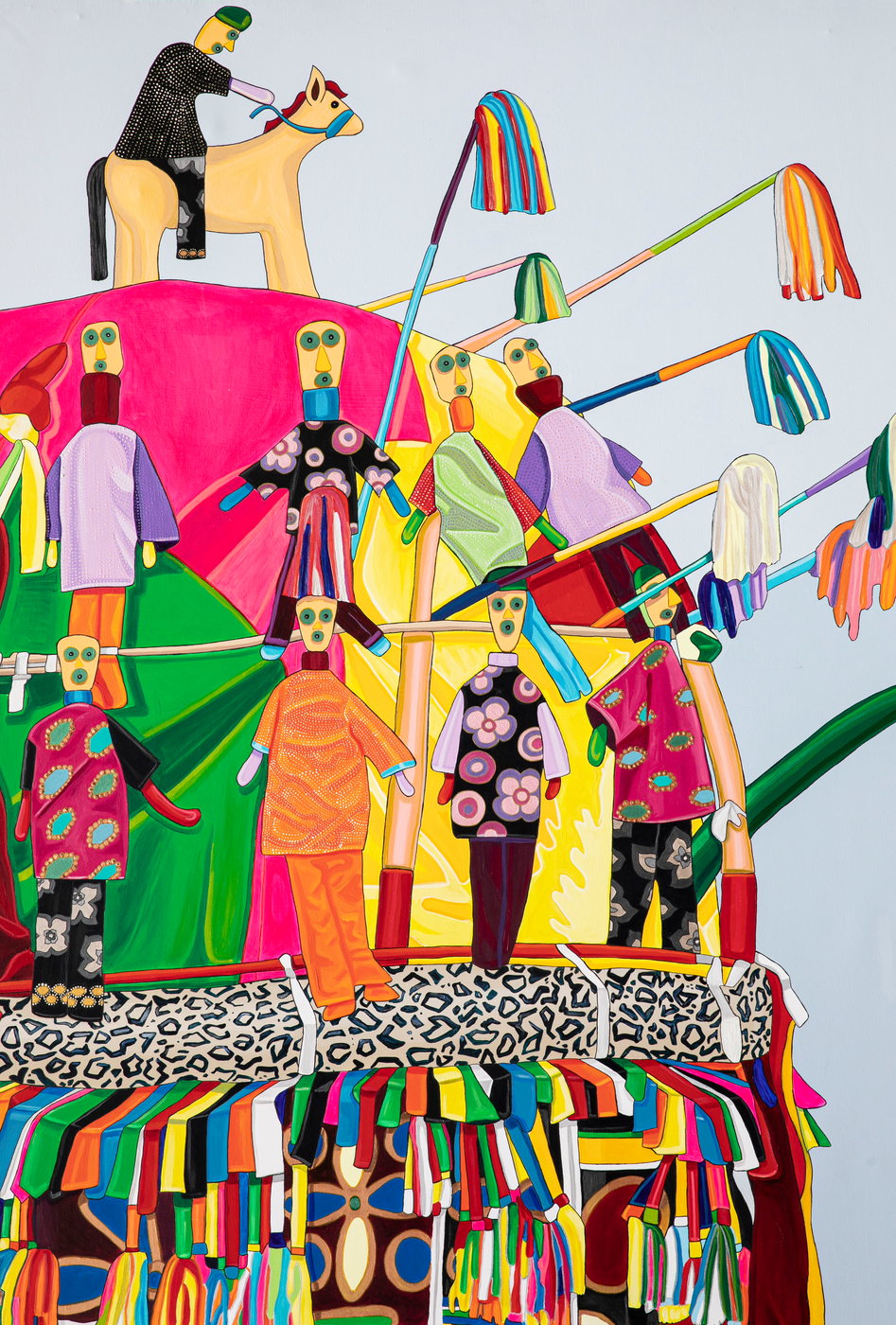
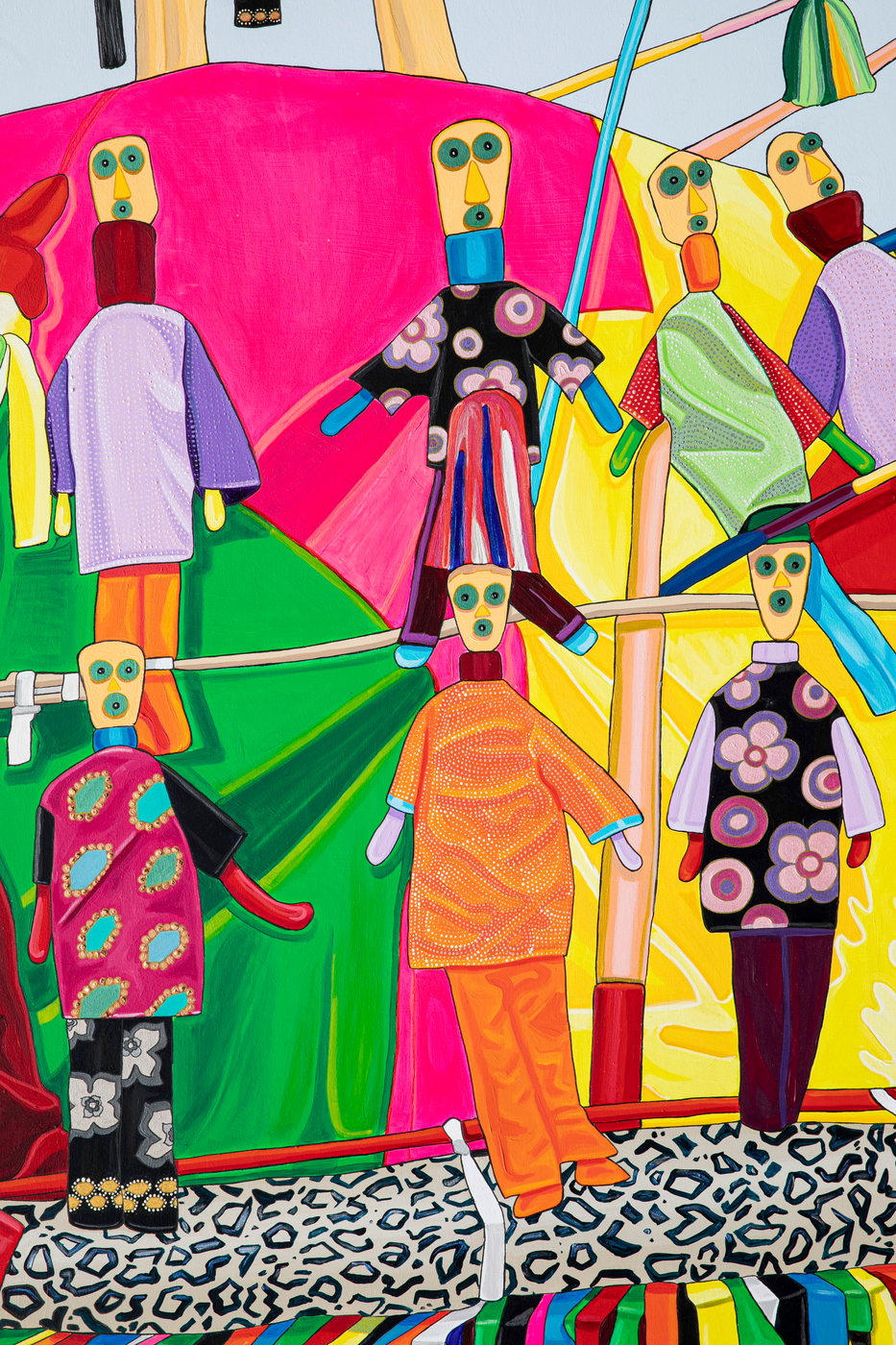
Detail
8 detail photographs of Ijele. Click any image to open it full screen, then swipe or use the arrows.
From the field
The masquerade as it appears in life, filmed at an outing in Onitsha. This is the source material the painting is drawn from.
Ijele in Procession
The largest masquerade in Igboland, turning with its drummers
Ijele at Full Height
Tiered figures, mirrors and appliqué carried above the crowd
To enquire about Ijele, or for press and curatorial requests:
Enquire →